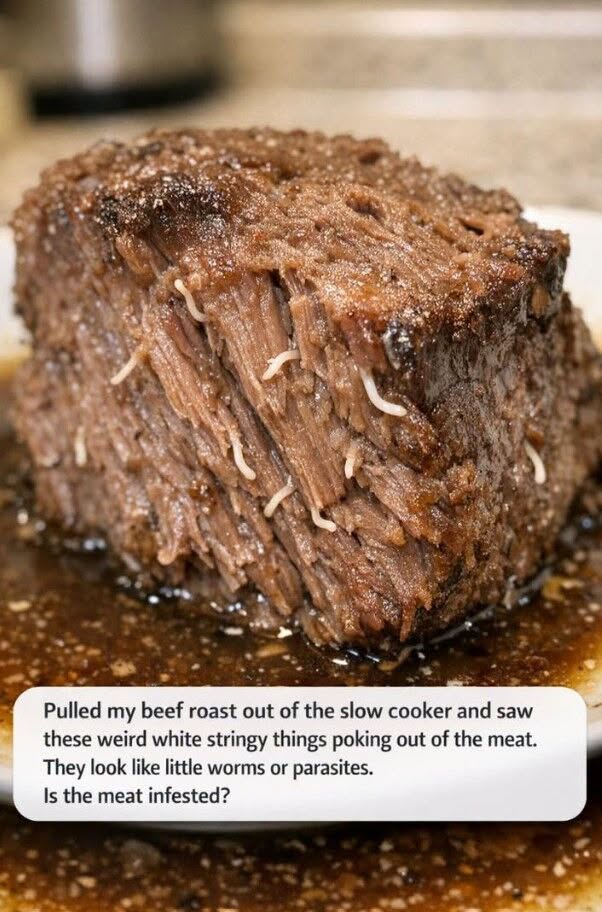
I Pulled My Beef Roast Out of the Slow Cooker and Saw Weird White Stringy Things — What Are They?

Cooking a beef roast in a slow cooker is one of the easiest ways to prepare a tender, flavorful meal. After several hours of slow cooking, the meat becomes soft, juicy, and easy to shred. However, some home cooks are surprised when they open the lid and notice thin, white, stringy fibers sticking out of the meat.

At first glance, these strands can look alarming. You may even wonder whether the beef is spoiled or contaminated. Fortunately, in most cases, there is a perfectly normal explanation: the white, stringy material is connective tissue and muscle fibers that have separated during cooking.

In this article, we’ll explain what those white strands are, why they become more noticeable during slow cooking, and how to distinguish normal connective tissue from signs that your beef may not be safe to eat.

What Are the White Stringy Things in Beef?

The most likely explanation is connective tissue, along with separated muscle fibers, becoming more visible as the meat cooks.

Beef naturally contains several types of tissue, including:

  • Collagen
  • Elastin
  • Muscle fibers
  • Fat and other connective tissues

When beef is cooked slowly for several hours, heat causes changes in these tissues. Collagen gradually softens and converts into gelatin, while muscle fibers separate and become tender.

The white, stringy material you see may therefore be:

  • Softened connective tissue
  • Tendon or other connective tissue
  • Collagen-rich fibers
  • Separated muscle fibers
  • Small strands of fat or other tissue

This is especially common in tougher cuts of beef that contain a lot of connective tissue.

Why Does It Happen More in a Slow Cooker?

Slow cookers use relatively low temperatures over an extended period. This gives tough cuts of meat plenty of time to soften.

During the cooking process:

  • Connective tissue gradually breaks down.
  • Collagen converts into gelatin.
  • Muscle fibers become tender and separate.
  • Fat renders and contributes flavor and moisture.

Because these changes happen gradually, you may actually see strands of connective tissue or muscle fibers that were less noticeable before cooking.

This is one of the reasons cuts such as chuck roast and brisket work so well in slow-cooker recipes.

Are the White Strings Worms or Parasites?

see continuation on next page