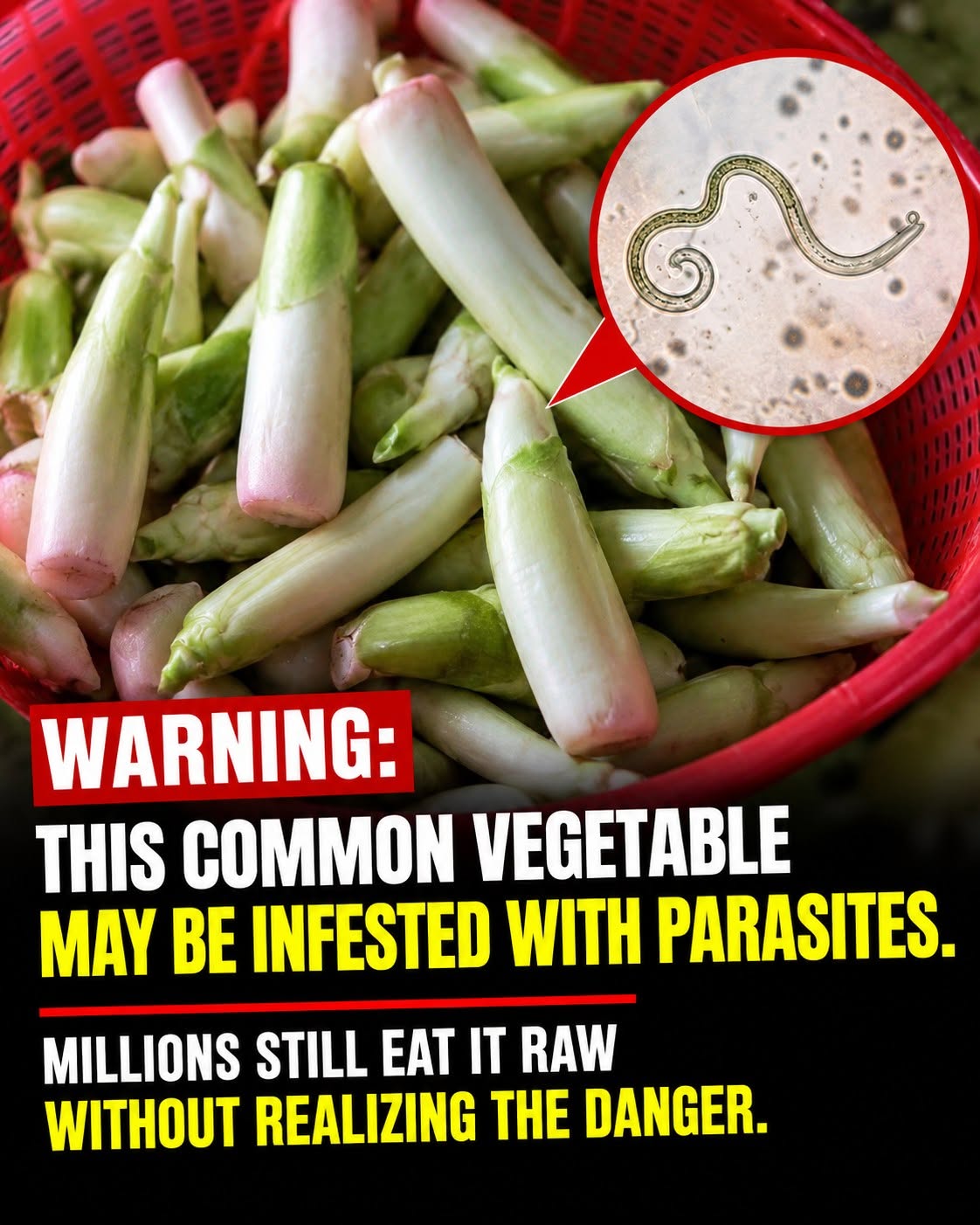
Raw vegetables are widely praised for their nutritional value and health benefits. Millions of people around the world consume them every day in salads, smoothies, and other healthy meals.
However, like any fresh produce, vegetables can become contaminated with harmful microorganisms if they are grown, handled, transported, or prepared under unsafe conditions.
Food-safety experts warn that certain types of produce may be more vulnerable to contamination because they grow close to the soil or are frequently eaten raw. Contaminated irrigation water, animal waste, poor sanitation, and improper handling can introduce bacteria, viruses, or parasites onto fresh produce.

The good news is that proper food-handling practices can greatly reduce these risks.
Why Can Raw Vegetables Become Contaminated?
Vegetables can come into contact with contaminated soil, water, animals, or equipment at various stages of production.
Produce grown close to the ground may be exposed to contaminated soil or irrigation water. Leafy greens, fresh herbs, and other vegetables that are commonly eaten raw can also be difficult to clean thoroughly because microorganisms may become trapped in folds, crevices, or between leaves.
In areas where sanitation systems are inadequate, parasite eggs and other pathogens can potentially contaminate agricultural environments.
This doesn’t mean that raw vegetables are inherently dangerous. Rather, the risk depends heavily on growing conditions, sanitation, handling, and preparation.
Which Vegetables Are More Likely to Be a Concern?
There is no single vegetable that can accurately be called “the most parasite-contaminated” worldwide.
The risk varies depending on where and how the food was grown and handled. Produce that is eaten raw and cannot be thoroughly cooked may deserve particular attention.
Examples include:
- Leafy greens such as lettuce and spinach
- Fresh herbs
- Vegetables grown close to the soil
- Raw sprouts
- Produce irrigated with contaminated water
The important factor is not simply the type of vegetable but the conditions under which it was produced and prepared.
Can Parasites Survive on Raw Produce?
Yes, certain parasites can contaminate fresh produce under unsafe agricultural or sanitation conditions.
Depending on the organism, contaminated food can potentially transmit intestinal parasites or other infections. Some parasites have complex life cycles and can affect organs beyond the digestive system.
However, severe complications are uncommon, and the vast majority of people who eat properly handled produce do not develop serious parasitic infections.
Can Parasites Affect the Brain?
Some parasitic infections can affect the nervous system, but these complications are relatively rare and depend on the specific parasite and how the infection develops.
Certain infections can cause neurological symptoms such as headaches, seizures, confusion, or other problems if parasites or their larvae affect the nervous system.
These conditions should not be interpreted as a routine consequence of eating raw vegetables. They are uncommon, but they demonstrate why food hygiene and proper sanitation are important.
How Does Produce Become Contaminated?
Contamination can occur long before vegetables reach the consumer.
Potential sources include:
- Contaminated irrigation water
- Animal or human waste
- Contaminated soil
- Poor sanitation during harvesting
- Dirty equipment or storage areas
- Improper transportation
- Cross-contamination during food preparation
Even produce purchased from supermarkets or markets can carry microorganisms