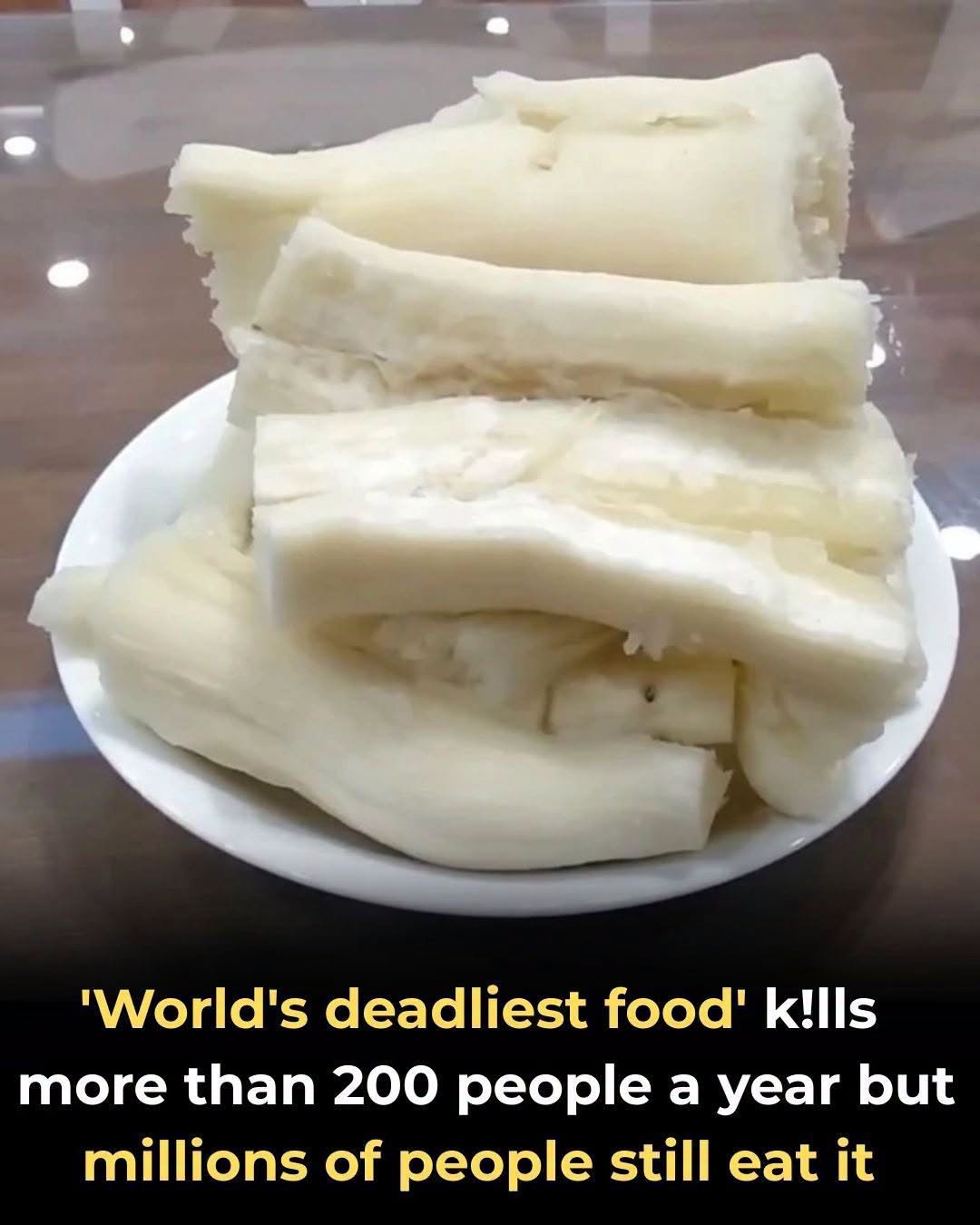
That alarming headline about the “world’s deadliest food” can certainly grab your attention. But as with many sensational health stories, the reality is more nuanced.
The food in question is cassava, also known as manioc or yuca. It is a starchy root crop that serves as an important source of calories for hundreds of millions of people, particularly in Africa, South America, and parts of Asia.
Cassava can contain naturally occurring cyanogenic compounds, which can release hydrogen cyanide when the plant tissue is damaged or improperly processed. Eating cassava that has not been adequately prepared can therefore cause cyanide poisoning.
The key is proper preparation
Cassava is not inherently a “deadly food.” The risk depends largely on the variety of cassava, how it is processed, and how much cyanogenic material remains after preparation.
Traditional preparation methods have been developed specifically to reduce these compounds. Depending on the type of cassava and the local practice, these methods can include:
- Peeling the roots
- Grating or crushing them
- Soaking
- Fermenting
- Drying
- Boiling or otherwise thoroughly cooking them
These processes can substantially reduce cyanogenic compounds. However, not every preparation method is equally effective, so cassava should be prepared according to established food-safety practices rather than assuming that ordinary cooking alone always makes it safe.
Why do people continue to eat cassava?
Because cassava is an extremely important crop.
It is relatively tolerant of drought and can grow under conditions in which some other staple crops struggle. For millions of households, it provides an affordable and dependable source of carbohydrates.
That is why describing cassava simply as “the world’s deadliest food” is misleading. Its importance to food security is enormous, while serious poisoning generally occurs when cassava is inadequately processed or when other risk factors are present.