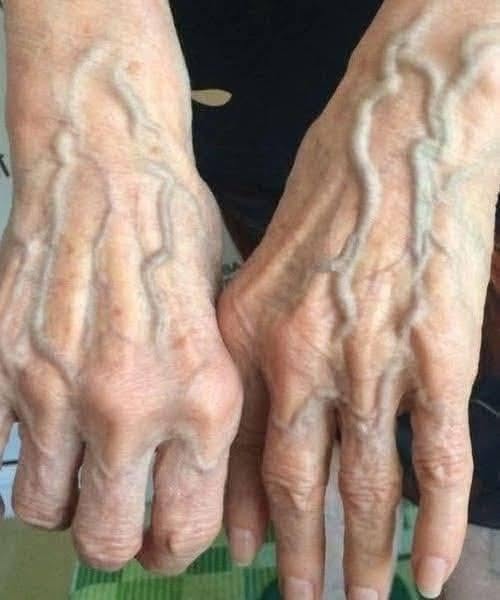
When to Worry About Veins That Appear Out of Nowhere!
The human vascular system is a complex network of blood vessels that sustains every organ and extremity. Often, we give little thought to the blue or green lines beneath our skin until the moment they suddenly appear to have multiplied or intensified. Discovering prominent veins on your hands, arms, legs, or chest can be a jarring experience, leading many to wonder if their circulatory system is signaling a crisis. While the sudden visibility of veins is frequently a benign byproduct of lifestyle changes, genetics, or the natural progression of aging, understanding the nuances of vascular health is essential for distinguishing a harmless physical trait from a medical warning sign.
To understand why veins appear “out of nowhere,” one must first understand the factors that normally keep them hidden. Typically, veins are obscured by a combination of skin thickness, dermal elasticity, and a layer of subcutaneous adipose tissue (body fat). When any of these factors change, the vascular network becomes more visually prominent. One of the most common reasons for increased vascularity is a reduction in body fat. When an individual loses weight or undergoes a period of intense physical conditioning, the insulating layer of fat between the muscles and the skin becomes thinner. As this barrier diminishes, veins become more visible beneath the skin, creating a more “shredded” or vascular appearance.
Physical exertion itself is another major driver of temporary vein visibility. During exercise, especially weightlifting or high-intensity interval training, the body requires increased blood flow to deliver oxygen and nutrients to working muscles. Increased blood flow and pressure in the muscles can make superficial veins more prominent. Over time, consistent resistance training can also lead to muscle hypertrophy—the growth of muscle fibers. As muscles become larger and body fat decreases, veins may become increasingly visible, even at rest. This combination helps explain why athletes often display prominent vascularity.
Environmental factors also play a subtle but significant role in how our veins appear on any given day. In hot weather, the body engages in a process called vasodilation. To prevent overheating, blood vessels near the surface of the skin widen, allowing more blood to flow close to the skin and facilitating heat loss. Consequently, on a humid summer afternoon or after a hot shower, your veins may appear larger and more blue than they do on a cold winter morning. This is generally a healthy, self-regulating physiological response, although it can be surprising if you have not noticed the pattern before.
The passage of time is another major factor in the increasing visibility of veins. As we age, the skin gradually loses collagen and elastin and becomes thinner. This reduced skin thickness can make the underlying blue and purple hues of veins much more apparent. Furthermore, the valves within the veins, which help prevent blood from flowing backward due to gravity, can become less effective over time. When these valves do not function properly, blood can pool in the veins, causing them to become enlarged or bulging. This can contribute to the development of varicose veins, particularly in the legs.
Hormonal shifts represent another significant, though often temporary, cause of increased vein visibility. Women, in particular, may notice more prominent veins during pregnancy, menopause, or while undergoing hormone therapy. During pregnancy, blood volume increases substantially to support the growing fetus. This increased volume can place additional pressure on the veins, making them more visible, particularly on the breasts, chest, and legs. Hormonal fluctuations can also influence blood vessels and contribute to changes in their appearance.
While the aforementioned causes are largely physiological, there are instances when newly prominent veins warrant medical evaluation. The primary concern with sudden vascular changes is the possibility of conditions such as venous insufficiency, superficial thrombophlebitis, or deep vein thrombosis (DVT). You should be particularly vigilant if a newly prominent vein is accompanied by localized pain, swelling, tenderness, or a feeling of heaviness in the affected limb. If a vein appears twisted, rope-like, and dark purple or blue—characteristics commonly associated with varicose veins—it may indicate that the valves are not functioning efficiently.
More critically, if a vein becomes suddenly prominent and is accompanied by redness, warmth, significant swelling, or pain in one leg or arm, it could indicate a blood clot or inflammation of a superficial vein. A DVT can be serious because a clot can potentially travel to the lungs and cause a pulmonary embolism. Sudden shortness of breath, chest pain, coughing up blood, fainting, or a rapid heartbeat alongside symptoms of a possible DVT requires urgent medical attention.
If you notice a new “spiderweb” pattern of tiny blood vessels on the chest or face, this is not necessarily a sign of a serious condition. However, widespread or rapidly developing spider angiomas can sometimes be associated with hormonal changes or, in certain circumstances, underlying liver disease. If such changes are new, numerous, or accompanied by other symptoms, it is worth discussing them with a healthcare professional.
Maintaining vascular health involves a proactive approach to circulation. Regular movement is one of the most effective ways to support healthy venous circulation. The calf muscles, in particular, act as a “muscle pump,” helping push blood upward toward the heart during walking and other leg movements. Staying adequately hydrated is also important for overall cardiovascular health, although dehydration does not necessarily make the blood “thick” enough to directly cause veins to become more prominent. For people who spend long periods sitting or standing, regular movement and, when medically appropriate, compression therapy can help reduce venous pooling and swelling.
In the vast majority of cases, a newly visible vein on the back of the hand or along the bicep is simply a sign of a body that is aging, exercising, losing body fat, or adapting to changes in temperature. However, context matters. Paying attention to whether these changes are accompanied by pain, swelling, redness, warmth, or other unusual symptoms can help distinguish ordinary vascular visibility from a potential medical problem. When in doubt—especially when changes are sudden, one-sided, or painful—consulting a healthcare professional is the safest approach.