Are the White Strings Worms or Parasites?
Usually, no.
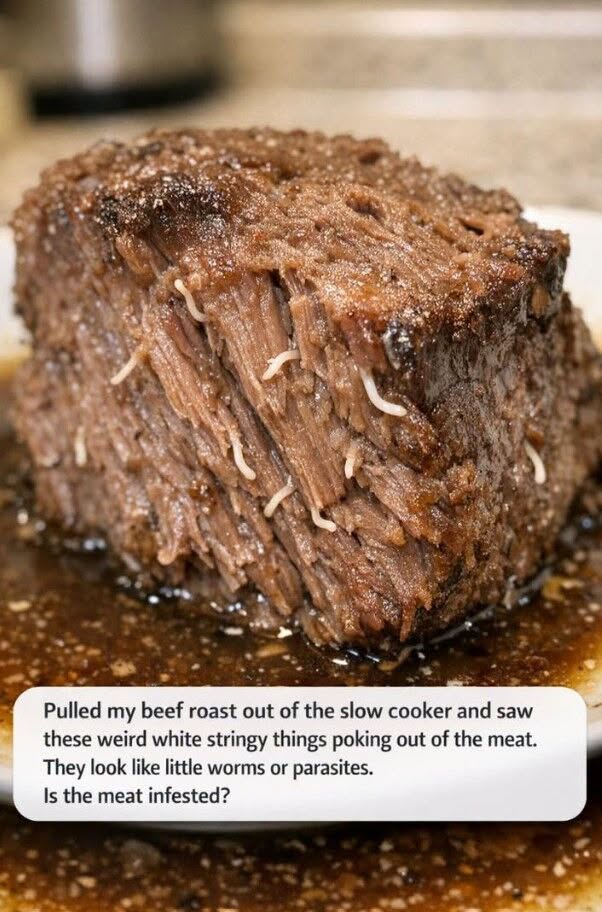
White stringy strands in cooked beef are far more likely to be normal connective tissue, collagen, fat, or separated muscle fibers than parasites.
However, it is important not to claim that unusual-looking meat can never be associated with a food-safety problem. The appearance of a single white strand is not enough to diagnose what it is.
If the meat looks or smells abnormal, was improperly stored, or you have another reason to suspect contamination, it is safer not to eat it.
How Can You Tell If Your Beef Is Safe to Eat?
The white strands themselves are generally not a reason to throw away a properly handled and cooked roast. Instead, consider the beef’s handling, cooking, storage, smell, and appearance as a whole.
1. Smell
Cooked beef should have a normal meaty aroma.
A strong sour, rotten, or otherwise unpleasant odor is a reason to discard it.
2. Texture
Slow-cooked beef should become tender and may easily pull apart with a fork.
A slimy or unusually sticky surface, particularly when accompanied by an off odor, can indicate spoilage.
3. Appearance
Cooked beef can range from brown to gray-brown depending on the cut and cooking method. The presence of white connective tissue is normal.
However, unusual discoloration combined with an unpleasant odor or questionable storage history is a reason to be cautious.
4. Cooking Temperature
Don’t rely on appearance alone to determine whether beef is safely cooked. For food safety, use a food thermometer and follow recommended cooking temperatures and times for the particular cut and preparation method.
Why Do Home Cooks Find This So Confusing?
It’s easy to mistake normal changes in meat for something dangerous, especially if you have never seen them before.
A few things contribute to the confusion:
- Raw and cooked meat can look dramatically different.
- Slow cooking causes connective tissues to separate visibly.
- Online photos can make harmless textures look alarming.
- Many people are unfamiliar with the structure of beef.
Understanding what happens to meat during cooking can make these unexpected textures much less concerning.
How Slow Cooking Improves Beef
The same process that creates those visible strands is part of what makes slow-cooked beef so tender.
As the roast cooks:
- Tough connective tissue softens.
- Collagen converts into gelatin.
- Muscle fibers become easier to separate.
- Rendered fat adds flavor and