What Does the “M” on Your Palm Say About Love?

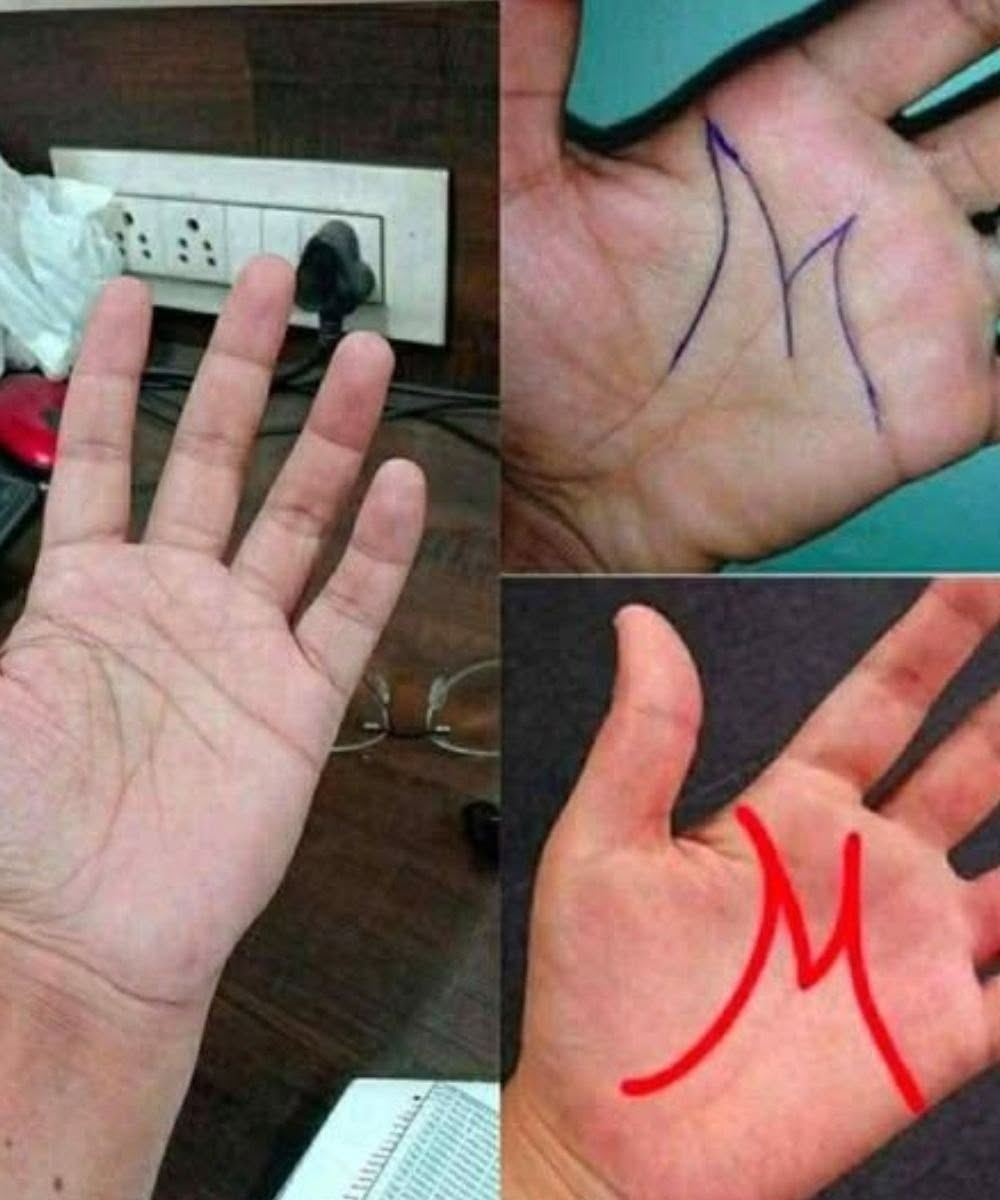
How to Check if You Have the “M”
Curious whether you have one? Here’s a simple way to look.
What You’ll Need
- A well-lit room
- Your dominant hand
- A mirror or phone camera, if helpful
Palmists traditionally examine the dominant hand for developed traits and the non-dominant hand for potential or inherited tendencies. Different palmistry traditions interpret the hands differently, however.
Steps
- Hold your hand with your palm facing you. Keep your fingers relaxed rather than stretching them stiffly.
- Locate your heart line, the upper line that runs across the palm below the fingers.
- Locate your head line, the line that generally runs across the middle of the palm.
- Locate your life line, the curved line that begins between the thumb and index finger and extends around the base of the thumb.
- Look at how these lines intersect. In popular palmistry interpretations, a recognizable “M” is formed by the major lines and their intersections.
- Take a photo if necessary. Sometimes the pattern is easier to see in a photograph than when you’re staring at your own hand.
One Important Note
Not every palm will form a clear “M.” Lines can be faint, broken, overlapping, or naturally shaped in ways that make the pattern difficult to identify. That’s completely normal.
A Skeptic’s Perspective
Let’s be honest: lines on your hand have not been scientifically demonstrated to determine your personality, romantic compatibility, or destiny. I also don’t think anyone should make major life decisions—such as whom to marry or whether to leave a relationship—based on a palm reading.
That said, symbols can still be meaningful.
The “M” might not cause you to be intuitive in love. But if you believe the symbol represents emotional sensitivity, you might become more aware of your own patterns. You might pay closer attention to your feelings, communicate more openly, or reflect on how you respond to other people’s emotions.
That isn’t magic. It can simply be self-reflection.
So here’s the balanced view: palmistry can be a fun and meaningful tool for reflection, similar to a personality quiz or horoscope. But it should never replace honest communication, therapy, or professional relationship advice when those are needed.
Frequently Asked Questions
Is the “M” on the Palm Rare?
It’s difficult to give a reliable percentage because there is no scientific standard for defining or measuring a palmistry “M.” Some palmistry sources describe a clearly recognizable “M” as relatively uncommon, but the appearance depends heavily on how the lines are interpreted.
Can the “M” Appear on Both Hands?
Yes. Some people have a similar pattern on both palms. In traditional palmistry, the two hands are often given different meanings, with interpretations varying between traditions.
Does the “M” Guarantee I’ll Find True Love?
No. No palm marking guarantees a romantic outcome. At most, palmistry offers symbolic interpretations of personality or emotional tendencies. Healthy relationships still depend on communication, compatibility, trust, and mutual effort.
What If I Don’t Have an “M”?
It means nothing negative about your love life. Palm markings are simply one traditional lens for self-reflection. You don’t need an “M” to be emotionally intuitive, loving, loyal, or capable of a deep relationship.
Can the “M” Change Over Time?
Some palmists believe palm lines can change with major life events or personal development. Scientifically, there is no evidence that such changes reflect changes in destiny or personality. Differences in the appearance of palm lines can result from factors such as skin elasticity, hydration, lighting, and how you hold your hand.
Is Palmistry Connected to Any Religion?
Palmistry has appeared in various cultural and historical traditions, including traditions associated with India, China, Greece, and Romani communities. It isn’t inherently tied to one religion, although some people incorporate it into their spiritual practices.
Should I Make Relationship Decisions Based on My Palm?
No. Palmistry is best treated as entertainment or a form of personal reflection, not as a basis for major life decisions. If you’re struggling in a relationship, consider talking openly with your partner, consulting a trusted friend, or seeking professional relationship support.
A Warm, Thoughtful Conclusion
So, what does the “M” on your palm say about love?
Maybe, according to palmistry, it represents emotional sensitivity—a tendency to notice what others are feeling before they say it. Maybe it symbolizes intensity, protectiveness, loyalty, and a desire for genuine connection.
Or maybe it says nothing at all.
Maybe it’s simply an accidental intersection of natural creases in your skin, with no deeper meaning beyond the literal.
Here’s what matters: the power isn’t necessarily in the marking. It’s in what the symbol inspires you to notice about yourself.
If seeing an “M” makes you pay closer attention to your emotional life, trust your judgment more thoughtfully, ask for honesty, or approach relationships with greater self-awareness, then it can still have value—even without being supernatural.
Your love life isn’t written in your palm. It’s shaped by your choices: your willingness to be vulnerable, your ability to communicate, your boundaries, and the small daily acts of attention and care that build a relationship.
That’s the real magic.
Not the lines on your hand.
The love in your heart.
Have you ever noticed an “M” on your palm? Do you think it describes your love life, or do you see palmistry as harmless fun? Share your thoughts in the comments.