2. “Spider Veins” (Telangiectasias)
What they look like:
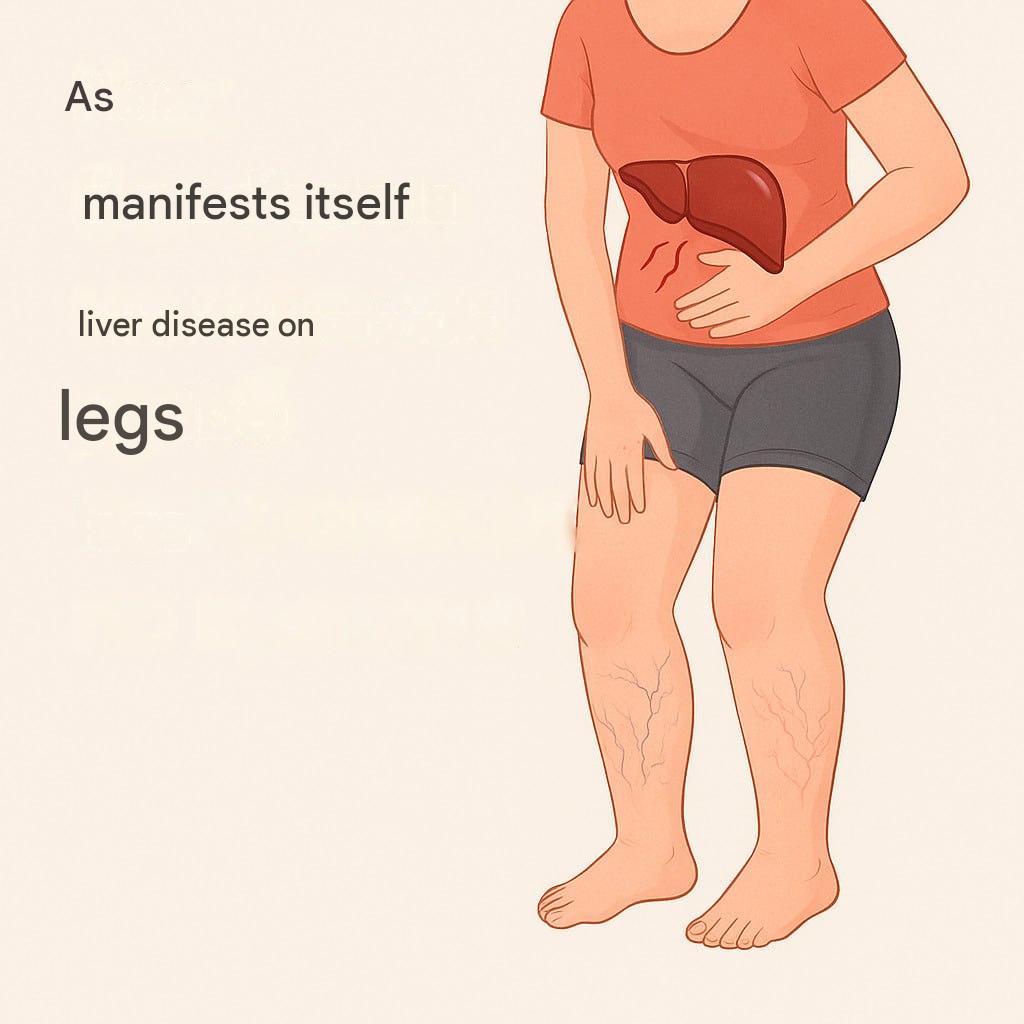
Small red or purplish blood vessels resembling a spider web, appearing on the ankles, feet, or legs.
Connection to the liver:
They are often observed in chronic liver diseases, including cirrhosis. They may result from changes in hormone metabolism—particularly increased estrogen levels—and increased venous pressure.
3. Changes in Skin Color
What they look like:
A yellowish tint (mild jaundice) or dark patches on the skin, especially around the ankles.
Connection to the liver:
Jaundice reflects an alteration in bilirubin metabolism. Dark patches may result from metabolic disorders and the accumulation of melanin associated with liver dysfunction.
4. Persistent Itching
What it feels like:
Continuous itching without a visible skin rash, often more intense at night.
Connection to the liver:
It can be an early sign of cholestasis, a condition in which the flow of bile slows down or becomes blocked. Accumulated bile acids can irritate nerve endings in the skin, causing itching.
5. Redness of the Feet (Plantar Erythema)
What it looks like:
Unusual redness and warmth on the soles of the feet, especially around the big toe and heel. The redness temporarily disappears when pressure is applied.
Connection to the liver:
This symptom has been associated with increased estrogen levels and dilation of the capillaries caused by portal hypertension.
⚠️ Important: These symptoms do not necessarily confirm liver disease. They can also occur with heart failure, kidney disease, allergies, varicose veins, or skin conditions. However, if several of these signs occur together or worsen over time, medical evaluation is strongly recommended.
What You Should Do
Do not ignore these warning signs. If you notice persistent swelling, spider veins, itching, or changes in skin color, especially if accompanied by:
- Fatigue
- Loss of appetite
- Nausea
- Pain under the right rib
- Changes in the color of your urine or stool
consult a gastroenterologist or hepatologist as soon as possible.
Prepare for Your Medical Appointment
Write down when the symptoms began and what makes them better or worse.
Keep track of any other symptoms.
Be prepared for possible tests such as:
- Blood tests (ALT, AST, bilirubin, alkaline phosphatase, GGT, albumin)
- Complete blood count
- Abdominal ultrasound
Conclusion
Your legs and feet do more than simply support your body: they can provide early clues about your liver health. Swelling, spider veins, itching, and changes in skin color are signs the body may send when something is not functioning properly.
Early diagnosis and timely medical advice are essential for effective treatment.