Why You Probably Never Noticed It Before
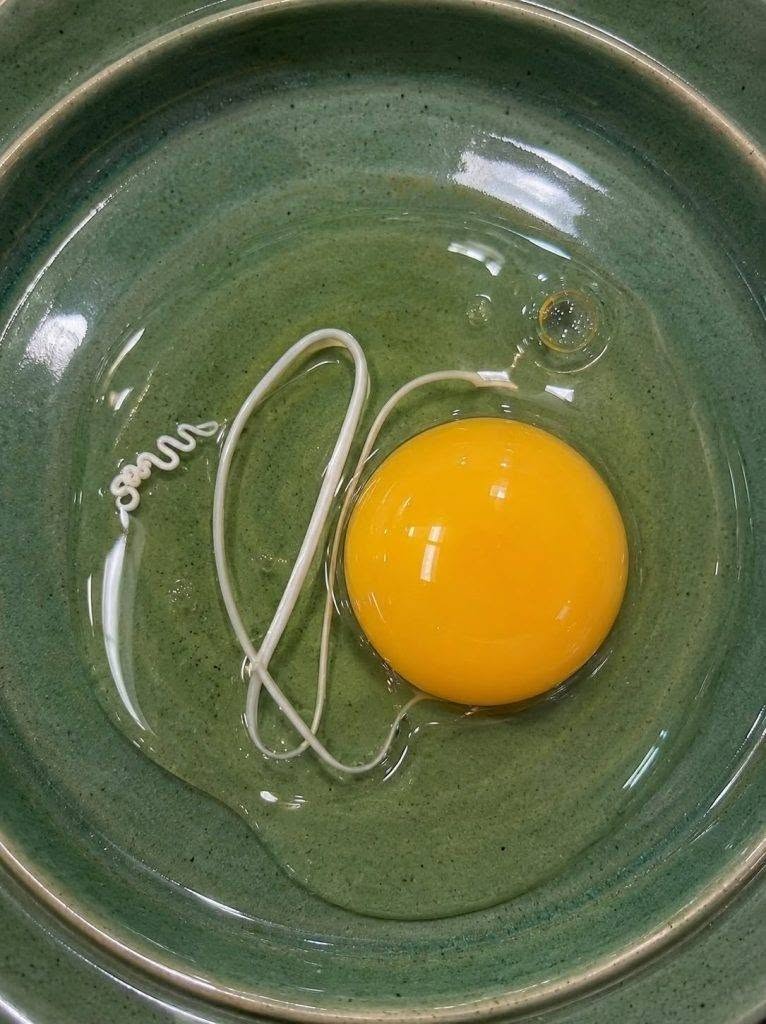
If this is the first time you’ve noticed a chalaza, you’re definitely not alone. Many people rarely pay attention to it because:
- They crack eggs directly into a hot pan. The egg white quickly becomes opaque, making the chalaza much harder to notice.
- They scramble or bake their eggs. Mixing the egg together makes the chalaza virtually invisible.
- They use eggs that aren’t especially fresh. As eggs age, changes in the egg white can make the chalaza less prominent.
- They simply don’t look closely. Most people crack an egg, cook it, and eat it without examining its structure.
The only reason I noticed mine was because I cracked the egg into a clear glass bowl and looked at it before cooking. Even then, it took me a moment to figure out what I was seeing.
Is the Chalaza Safe to Eat?
Yes. Absolutely.
The chalaza is a normal part of the egg and is made primarily of the same proteins found in the egg white. It’s completely edible.
Some people remove the chalaza for aesthetic reasons, particularly when they’re preparing recipes where they want an exceptionally smooth egg mixture. But there’s no need to remove it for safety.
You can simply leave it in and cook the egg as usual.
And despite how strange it might look, the chalaza isn’t a sign that the egg is spoiled or contaminated.
Other Strange Things You Might Find in Eggs
The chalaza is probably the most common “weird” thing people notice in an egg, but it’s not the only one.
Here are a few other things you might see and wonder about.
Blood Spots
Blood spots are small red or brown spots that can appear in or around the yolk. They occur when a tiny blood vessel ruptures during the egg’s formation.
They can look alarming, but they