HOW TIPPING CULTURE IS CHANGING
1. Digital payment screens
Modern checkout systems often automatically prompt customers to leave a tip, even when the order involves minimal service.
2. Increasing customer confusion
Many customers feel pressured or unsure when they are presented with preset tipping options at pickup counters.
3. Changing expectations
What was once considered optional can now feel socially expected in some restaurants, cities, or cultures.
WHAT ETIQUETTE EXPERTS SAY
1. There is no universal rule
Tipping for takeout is generally not universally required, but it can be appreciated depending on the circumstances and local customs.
2. Consider the level of service
If employees went out of their way to help you, handled a complicated order, accommodated special requests, or prepared a large order, leaving a tip may be more appropriate.
3. Small gestures can still matter
Even a small tip can communicate appreciation and respect for the work employees put into preparing your order.
4. Context matters
Tipping customs vary significantly between countries, cities, restaurants, and service models. What is considered normal in one place may be unusual somewhere else.
HOW MUCH SHOULD YOU TIP FOR TAKEOUT?
If you choose to tip for a carry-out order, some common approaches include:
- A small fixed amount, such as $1–$3
- 5–10% of the order total
- Rounding up the bill
- Leaving a larger tip when employees provide exceptional or additional service
However, there is no universal amount, and tipping for takeout is often optional.
WHY DOES THIS TOPIC CREATE SO MUCH DEBATE?
1. Different expectations
Customers and restaurant workers may have different ideas about what a tip is supposed to cover.
2. Social pressure
Digital tipping prompts can make customers feel obligated to tip, even when they are unsure whether a tip is appropriate.
3. Changing service models
Restaurants now offer many different service models, including dine-in, takeout, curbside pickup, delivery, counter service, and self-service. Because the level of service varies, traditional tipping rules can feel less clear.
THE BALANCE BETWEEN CUSTOM AND CHOICE
Tipping ultimately sits somewhere between tradition and personal choice. While tipping has traditionally been associated with rewarding good service, changing dining habits have made the boundaries less clear.
Some people tip out of habit, while others tip only when they feel that additional service deserves recognition. Many people adjust their tipping based on the situation.
CONCLUSION
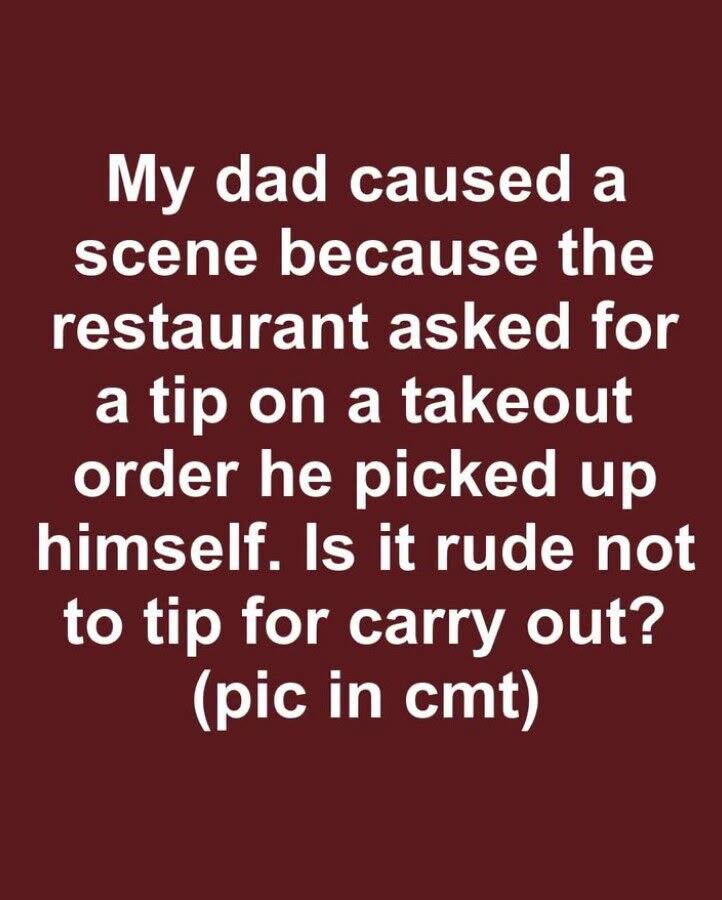
So, is it rude not to tip for a carry-out order?
There is no simple answer. It depends on personal beliefs, local customs, and the level of service provided.
Tipping for takeout is generally not considered mandatory, but it can be a thoughtful way to show appreciation for restaurant employees who prepare, package, and handle your food. At the same time, many customers believe that tipping should primarily be reserved for situations involving direct, full-service hospitality.
Ultimately, the decision comes down to personal choice and circumstances. What matters most is being aware of local customs, treating restaurant workers with respect, and understanding that tipping culture continues to evolve.