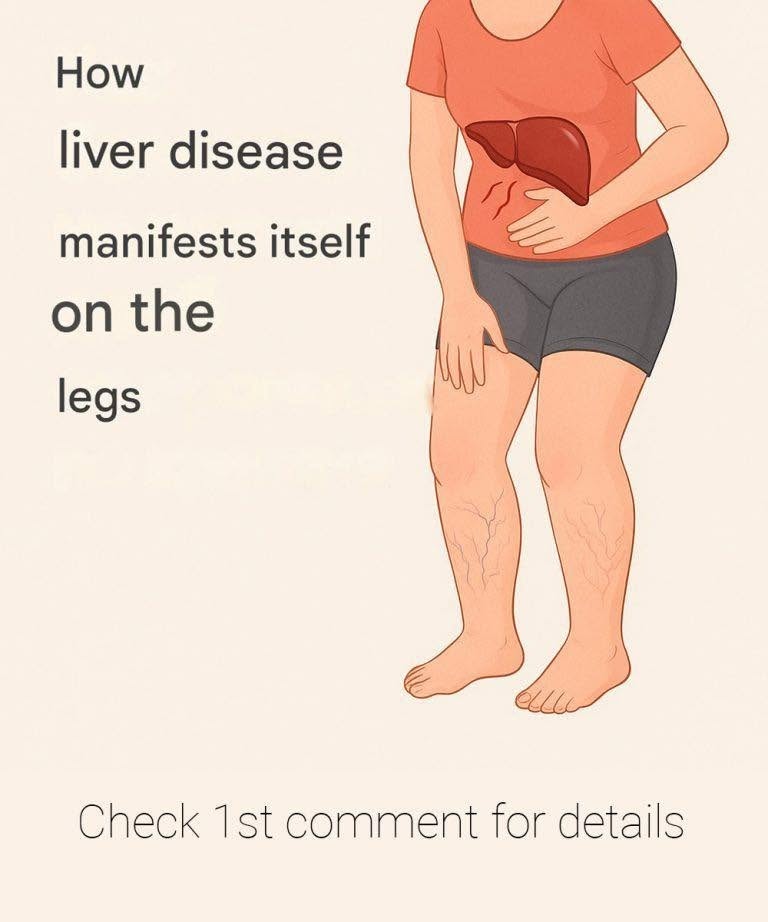
Your Legs Are Screaming “HELP!”: 5 Warning Signs That Could Be Linked to Liver Disease
You might not expect your legs to reveal what’s happening with your liver—but liver disease can sometimes cause symptoms far beyond the abdomen. Because the liver plays an important role in regulating fluid balance, producing proteins involved in blood clotting, and processing bile and other substances, liver dysfunction can sometimes contribute to swelling, itching, bruising, or muscle problems.
If your legs are unusually swollen, itchy, weak, or prone to bruising—especially if you have risk factors such as heavy alcohol use, obesity, viral hepatitis, or a history of fatty liver disease—it’s worth discussing these symptoms with a healthcare professional.
🔴 5 Leg-Related Warning Signs That Can Occur With Liver Disease
1. Swelling in the Ankles, Feet, or Lower Legs (Edema)
Why it happens: Advanced liver disease can reduce albumin production and contribute to changes in fluid balance. As a result, fluid can accumulate in the tissues, particularly in the lower legs because of gravity.
What it looks like: Pitting edema, in which pressing a finger into the swollen area leaves a temporary indentation, as well as tight shoes or deep sock marks.
It may occur with: Abdominal swelling caused by fluid accumulation (ascites).
2. Intense, Persistent Itching (Pruritus)
Why it happens: Some liver conditions, particularly cholestatic diseases such as primary biliary cholangitis (PBC) and primary sclerosing cholangitis (PSC), can cause substances associated with impaired bile flow to accumulate in the body and trigger severe itching.
What it feels like: A deep, persistent itch that may be worse at night and may not improve with ordinary moisturizers. It can affect the legs, arms, palms, or soles.
3. Spider Angiomas or Red Palms
Why it happens: Certain chronic liver diseases can be associated with changes in blood vessels and hormone metabolism.
On the legs: Spider angiomas are small, reddish blood vessels with a central spot and radiating vessels. They can occur on the upper body and sometimes elsewhere, including the legs.
On the palms: Palmar erythema causes persistent redness of the palms and can occur in people with chronic liver disease, although it also has other possible causes.
4. Muscle Cramps or Weakness in the Legs
Why it happens: Advanced liver disease can be associated with muscle loss, nutritional deficiencies, fluid or electrolyte disturbances, and other metabolic changes. These may contribute to muscle weakness, cramps, or fatigue.
What you may notice: Painful cramps, muscle fatigue, weakness, or difficulty performing activities that were previously easy.
5. Easy Bruising or Purple Spots
Why it happens: The liver produces many of the proteins needed for normal blood clotting. Significant liver dysfunction can interfere with clotting and, together with other changes such as low platelet counts, make bruising or bleeding more likely.
What to look for: Bruises that appear without an obvious injury or small red-purple spots on the skin (petechiae).
⚠️ When to Seek Medical Attention
See a healthcare professional if you develop unexplained or persistent leg swelling, itching, bruising, weakness, or other symptoms that concern you.
Seek urgent medical attention if:
One leg suddenly becomes swollen, painful, warm, or red, particularly if the swelling is new or unexplained. This can be a sign of deep-vein thrombosis (DVT).
You develop yellowing of the skin or eyes (jaundice).
You have severe abdominal swelling or pain.
You develop confusion, extreme drowsiness, or significant changes in mental status.
You experience vomiting blood, black/tarry stools, or significant unexplained bleeding.
Important: One-sided leg swelling is not typical of liver-related edema and can indicate a blood clot. If it is accompanied by sudden chest pain, shortness of breath, or coughing up blood, seek emergency medical care immediately.
🩺 What Your Doctor May Check
see continuation on next page