Health Conditions
Research indicates that the body absorbs and uses water regardless of when it is consumed. The kidneys, heart, and circulatory system do not function differently simply because water is consumed at a particular time of day.
Therefore, while morning hydration can be helpful, overall daily fluid intake is more important for maintaining good health. Adequate hydration supports normal cognitive function, helps prevent fatigue, and reduces the risk of dehydration-related headaches.
A common belief is that drinking water in the morning “flushes toxins” from the body. In reality, the body already has highly effective systems for removing waste and processing potentially harmful substances. The kidneys continuously filter the blood and remove waste through urine, while the liver processes and metabolizes many substances.
Water supports these processes by maintaining normal circulation and helping the kidneys eliminate waste. However, drinking large amounts of water at a specific time does not enhance the body’s natural detoxification processes beyond normal physiological function. Relying on morning water consumption as a “detox” strategy is therefore misleading. Overall hydration, a balanced diet, regular physical activity, and adequate sleep are more important for supporting the body’s natural functions.
Practical Hydration Tips
1. Start your day hydrated—but don’t overthink it
A glass of water in the morning is perfectly fine. It can help replace some of the fluid lost overnight, but it is not a magic health boost.
2. Focus on your total daily fluid intake
Many adults need roughly 2–3 liters of fluids per day, although individual needs vary depending on body size, activity level, climate, diet, and health status.
A simple guide is urine color: pale-yellow urine generally indicates adequate hydration, although urine color can be affected by certain foods, medications, and supplements.
3. Drink consistently, not all at once
Spacing fluid intake throughout the day is generally more practical and effective than consuming a very large amount at one time.
4. Adjust for activity and environment
Exercise, hot weather, fever, vomiting, or diarrhea can increase fluid needs. When sweating heavily for prolonged periods, electrolytes may also be needed.
5. Don’t rely on thirst alone
Thirst is an important signal, but it may become less reliable with age or during certain circumstances.
6. Include water-rich foods
Fruits and vegetables such as cucumbers, oranges, strawberries, and watermelon can contribute significantly to daily fluid intake.
7. Be cautious with “detox” claims
Your body already has efficient systems for removing waste. Instead of relying on detox drinks or specific drinking schedules, focus on:
- A balanced diet
- Regular physical activity
- Adequate sleep
- Sufficient fluid intake
8. Avoid overhydration
Drinking excessive amounts of water can dilute the sodium concentration in the blood, a condition known as hyponatremia. Although uncommon, severe hyponatremia can be dangerous. The goal is adequate hydration—not excessive water consumption.
What About the Heart Attack Claim?
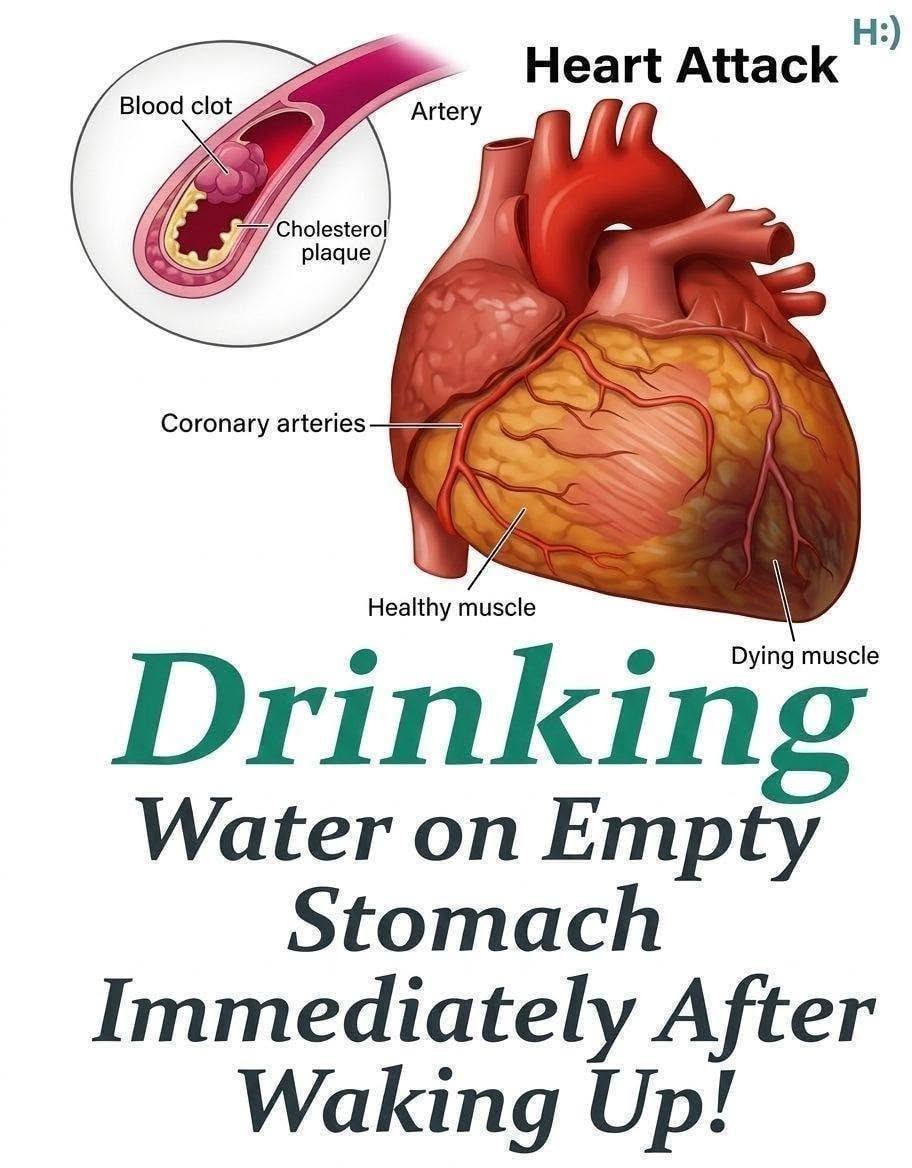
There is no solid scientific evidence that drinking water on an empty stomach directly prevents heart attacks.
Heart attack risk is influenced by many factors, including:
- Blood pressure
- Cholesterol levels
- Diet
- Physical activity
- Smoking
- Diabetes
- Age
- Family history and genetics
Adequate hydration supports normal bodily functions and overall health, but drinking water on an empty stomach should not be considered a standalone strategy for preventing heart disease.
The Bottom Line
Drinking water after waking up is a healthy habit, especially if you are thirsty or have gone several hours without fluids. However, there is nothing uniquely “detoxifying” or metabolism-boosting about drinking water on an empty stomach.
The real key is simple: stay adequately hydrated throughout the day.