The Ingredients Behind This Homemade Spray
This popular mixture relies on four main ingredients:
- White vinegar
- Salt
- Citric acid
- Liquid dish soap
Each ingredient plays a specific role in damaging the weed.
Salt
Salt is one of the most powerful components in the mixture. It works by drawing water out of plant cells through a process called osmosis.
Without sufficient water, the plant struggles to survive.
However, salt must be used very carefully because it can also damage the soil itself and may prevent other plants from growing in treated areas.
Citric Acid
Citric acid provides additional acidity that can help damage plant tissue. Combined with vinegar, it increases the solution’s contact effect on exposed leaves.
Liquid Dish Soap
Plant leaves naturally contain a waxy coating that repels water. Dish soap helps reduce surface tension, allowing the vinegar and citric acid solution to spread across and stick to the weed rather than simply rolling off.
What This Weed Killer Can and Cannot Do
Many people expect homemade weed sprays to work exactly like commercial systemic herbicides. That is not usually the case.
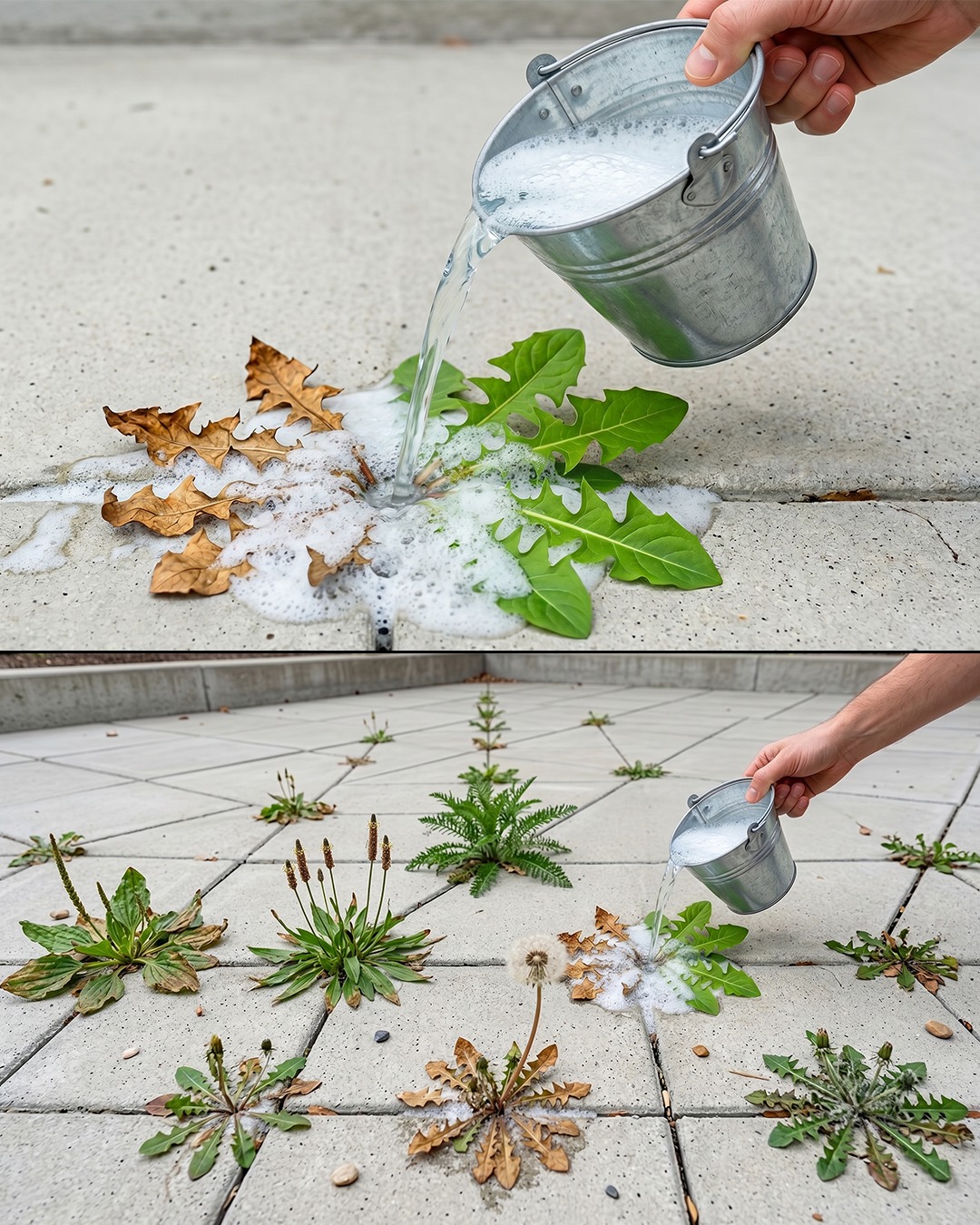
This mixture primarily acts as a contact weed killer. It damages the parts of the plant that it touches directly.
The leaves may begin to wilt within hours and can appear severely damaged within a day or two. However, deep roots may survive.
For perennial weeds, new growth can sometimes emerge weeks later, meaning multiple treatments may be necessary.
Because salt can accumulate in soil and harm desirable plants, this type of spray is best limited to areas where vegetation is not wanted, such as cracks in paving or gravel paths, rather than garden beds or areas where you plan to grow plants.