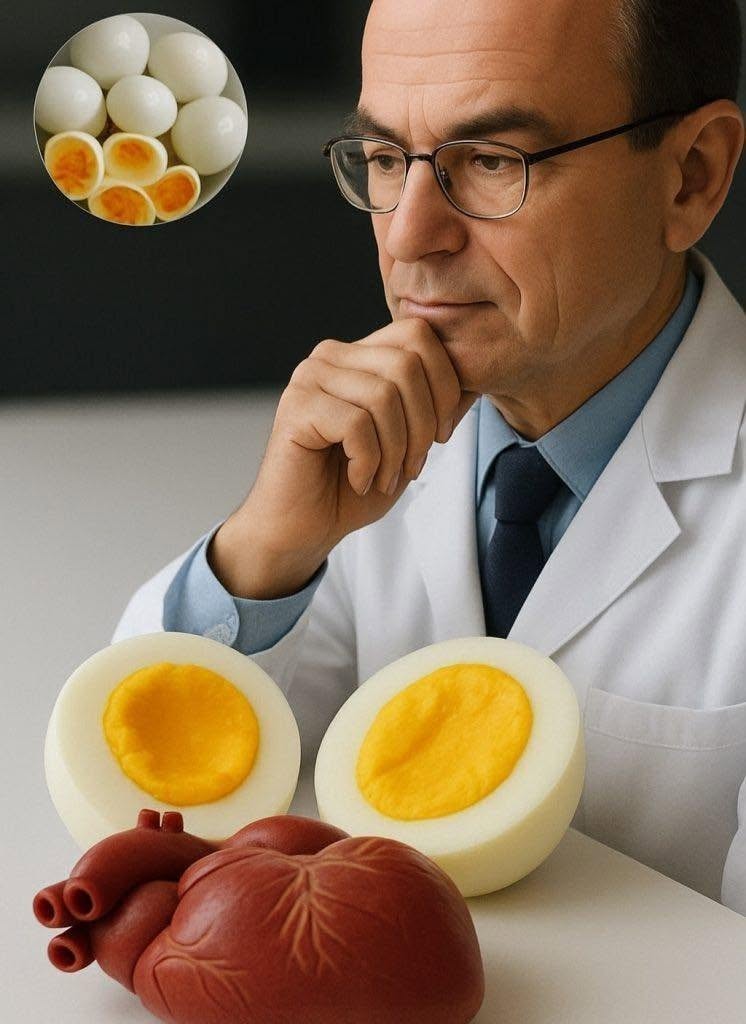
What About the Cholesterol in Eggs?
A large egg contains roughly 186 mg of dietary cholesterol, most of it in the yolk.
For many years, dietary cholesterol was considered one of the primary dietary causes of high blood cholesterol. Current evidence indicates that the relationship is more complicated. For most people, dietary cholesterol has a smaller effect on blood cholesterol than saturated and trans fats.
This does not mean that dietary cholesterol has no effect or that everyone responds to eggs in the same way. Individual responses vary, and the overall dietary pattern matters.
Rather than focusing exclusively on the cholesterol content of one food, it is generally more useful to consider the entire diet—especially the amount of saturated fat, fiber, vegetables, fruits, whole grains, and minimally processed foods.
Who Should Be More Careful?
People with certain conditions may need individualized advice about egg and yolk consumption, particularly those with:
Familial hypercholesterolemia
Significantly elevated LDL cholesterol
Established cardiovascular disease
Diabetes, depending on their overall cardiovascular-risk profile
If you have one of these conditions, discuss your dietary pattern and appropriate egg intake with your doctor or a registered dietitian rather than relying on a universal daily limit.
Boiled vs. Fried: Does Preparation Matter?
How eggs are prepared can affect the nutritional profile of the meal.
Preparation Consideration
Boiled No added cooking fat and a simple way to prepare eggs
Poached No added cooking fat and similarly simple
Scrambled Can be heart-friendly depending on the amount and type of fat used
Fried in butter or other saturated-fat-rich fats Can add significant saturated fat and calories
Boiling does not make an egg inherently heart-protective, nor does frying automatically make an egg unhealthy. What matters is the cooking method, the amount and type of added fat, and the rest of the meal.
For example, a boiled egg served with vegetables and whole-grain toast is quite different nutritionally from eggs served with processed meat, refined carbohydrates, and large amounts of butter.
The Bottom Line
For most healthy adults, eggs can fit into a heart-supportive eating pattern. A boiled egg is a convenient source of high-quality protein and several important nutrients, and it contains no added cooking fat.
For a heart-healthy diet, pair eggs with:
Plenty of vegetables and fruits
Whole grains
Beans and other legumes
Nuts and seeds
Healthy unsaturated fats such as olive oil
Fish and other nutritious protein sources
Limited processed meats, refined carbohydrates, and foods high in saturated fat
The boiled egg is not a magic food for cardiovascular health—but neither does it need to be avoided by most people. The strongest approach is to focus on the overall dietary pattern rather than labeling individual foods as simply “good” or “bad.”
If you have diabetes, familial hypercholesterolemia, significantly elevated cholesterol, or established heart disease, personalized dietary advice from a healthcare professional can help determine what amount of eggs is appropriate for you.
In heart health, balance matters more than extremes.